Industry
Soft porcelain is flexible stone cladding
Soft porcelain is the buyer name for a mineral flexible-stone sheet, 2–4 mm thick and 3–8 kg/m², with the fire class locked to the current data sheet.
In brief
- Soft porcelain is a mineral flexible-stone sheet, not a ceramic tile or a clay body.
- Thickness is 2–4 mm and mass is 3–8 kg/m². Lock both to the current data sheet.
- Class A applies above 3 mm. Thinner sheets follow the coating-type rule on that series.
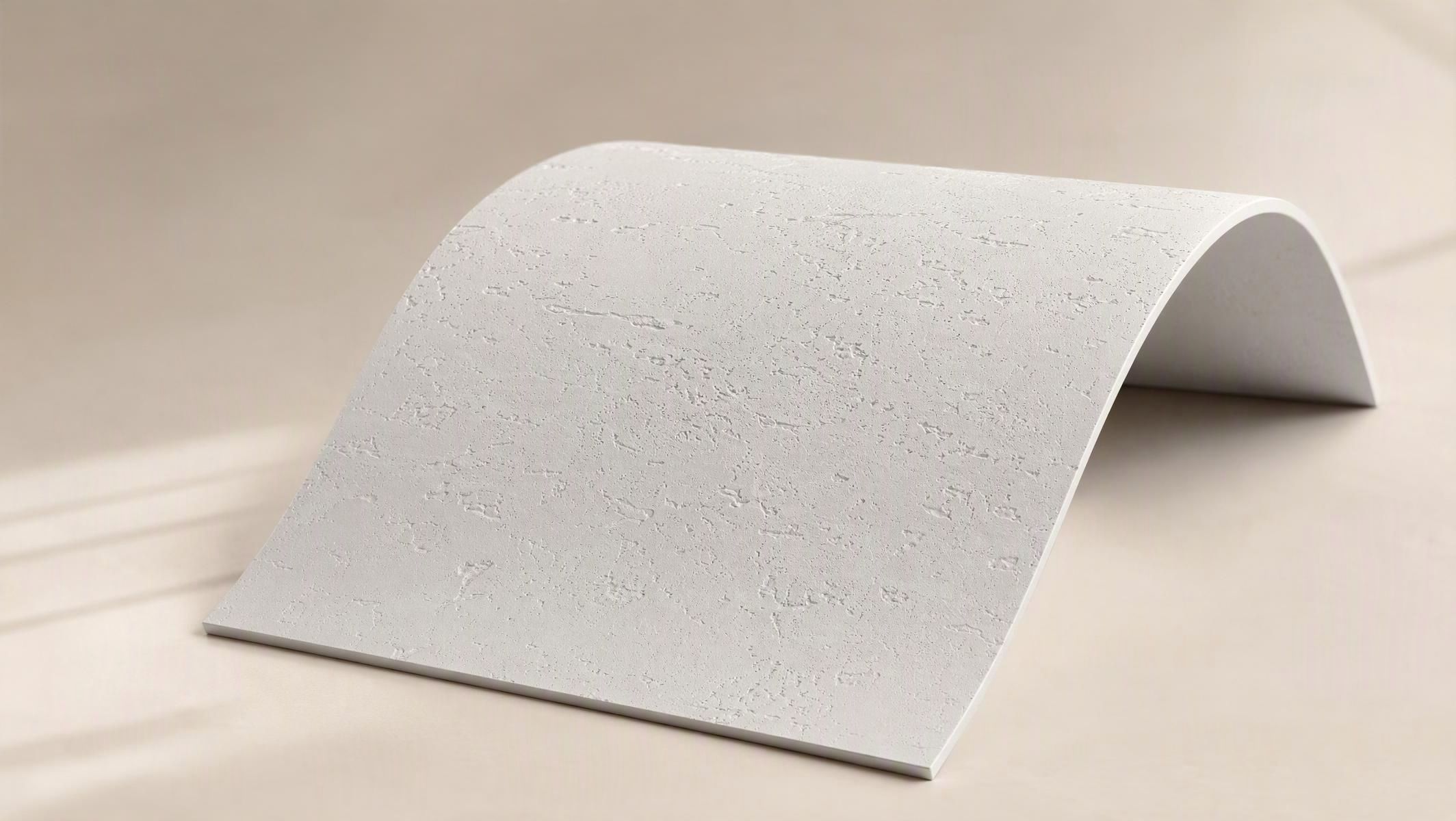
Procurement teams that type soft porcelain are usually trying to put a stone face on a wall that cannot carry stone. The search phrase names a category. What can be specified is a series: thickness, mass, fire class, and the adhesive system named for that sheet. This note is the path from the phrase to the sheet milled in Zhongshan.
What the phrase refers to
Soft porcelain, soft porcelain veneer, and flexible ceramic tile arrive as the same inquiry. They are not a fired porcelain tile, and they are not a clay body bent into a veneer. The sheet on this line is mineral flexible stone. One technical name belongs in the file once: modified mineral cladding (MCM facing sheet). The name used everywhere else on this site is flexible stone cladding.
Call it a complementary mineral skin. It sits beside stone and tile where those materials are too heavy or too rigid for the build-up. It is not a cheaper tile. A search term that contains the word porcelain does not transfer a tile certificate, a tile thickness, or a tile fixing method onto this sheet.
What can be written into a specification
The current mix is 2–4 mm thick and weighs 3–8 kg/m². Write the band into the specification, then replace the band with the number on the data sheet of the series being sampled. A facade photograph does not state the mass. A cutting from a different thickness does not carry the same fire class.
Fire class follows thickness. Above 3 mm the path is Class A. Below 3 mm the coating-type rule on that sheet applies. Change the series and the class changes with it. Do not copy a class from a journal note into a tender. Lock it to the current data sheet.
Overlay, curves, and insulated walls
Three requests account for most of the inquiries that start with soft porcelain.
Overlay is the renovation path. The sheet can face a sound existing substrate — concrete, a stable render, or a tile that is remaining — when the adhesive is the system named for the series. Flexibility is not a reason to skip a survey of the old wall. If the substrate moves, the facing moves with it, and the data sheet is what says whether that movement is acceptable.
Curves are the reason to choose the sheet instead of tile. A column, a bullnose, or a tight return can take a mineral skin where a rigid tile stops. The radius that sheet will follow is printed on the data sheet for the series. It is not implied by the words soft or flexible.
Insulated walls need a facing that can follow the movement of the insulation system. Confirm the system first, then the sheet. Mass in the 3–8 kg/m² band is what keeps the facing from becoming a second structure on the elevation. Specify the system, then the skin. Do not take the mass from a brochure image.
Before a volume order
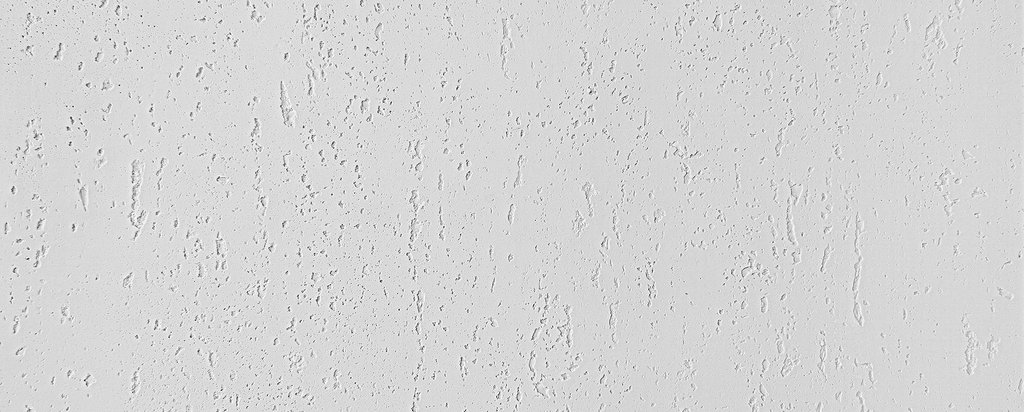
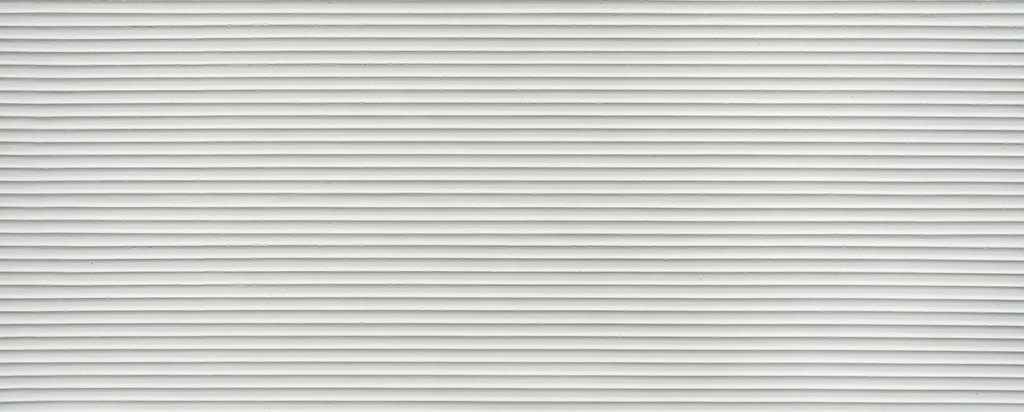
Ask for the current data sheet and a sample of the look that will actually be specified. Thickness, mass, and fire class belong to a series. They do not belong to the phrase soft porcelain. The look board is the set of skins milled on that sheet. Travertine, Cement Panel, and Ripple Panel are three of them. Match the sample to the elevation, then match the numbers to the sheet in front of you.
The skin changes how the wall reads. It does not change the rule. A pitted stone elevation is checked against a Travertine sample. A quiet cast plane is checked against Cement Panel or Ripple Panel. In every case the data sheet of that series still sets thickness, mass, and fire class. A swatch labelled only soft porcelain is not a specification.
Compare skins on the look board, including Travertine, before the series is named in the tender.
See the look board, or request a sample and the current data sheet.

Specifying a wall? Ask for the current data sheet and a sample of the look.