Industry
Is flexible stone waterproof? Wet zones, splash areas and poolside
Flexible stone absorbs below 0.1 kg/m²·h⁰·⁵, but the 2–4 mm sheet is a facing, not the waterproofing. Wet zones still need the wall's own waterproofing behind it.
In brief
- Water absorption stays below 0.1 kg/m²·h⁰·⁵; the sheet is a facing, not the waterproofing layer.
- Behind the 2–4 mm face, substrate waterproofing, falls and joints stay with the wall build-up.
- Confirm wet-zone adhesive and joint detail on the current series data sheet before scheduling.
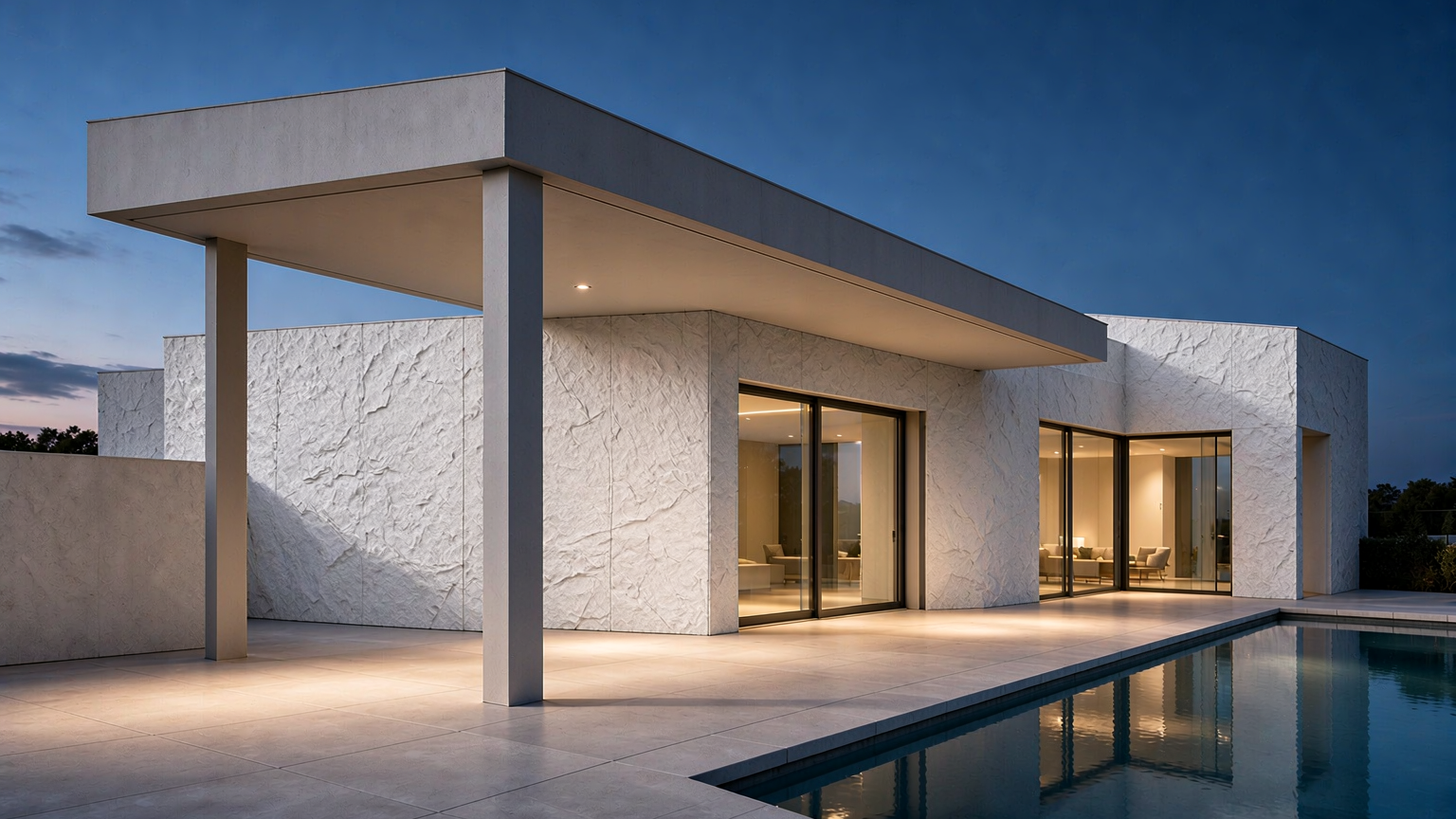
Flexible stone is a mineral facing 2–4 mm thick, and "is it waterproof" deserves a precise answer rather than a flat yes or no. Water absorption on the current data sheet stays below 0.1 kg/m²·h⁰·⁵, so the face itself takes on almost no water. But a 2–4 mm sheet is not a tanking membrane. In a bathroom or on a poolside wall, the waterproofing still belongs to the substrate behind the sheet. This article separates what the facing does from what the wall build-up must do, and lists the detailing decisions that decide whether a wet-zone installation stays sound over the life of the building.
What "waterproof" has to mean for a 2–4 mm sheet
Yangphen Stone (Zhongshan, China) makes flexible stone cladding in 2–4 mm thickness at typically 3–8 kg/m² — a fraction of natural stone at 10–40 kg/m². At that thickness the sheet is a mineral facing bonded to the wall. It is not a tanking membrane, a shower tray or a pool shell, and it is not asked to be one. Treating it as waterproof in the tanking sense is the single most common mis-specification, and it is avoidable once the two jobs are separated: the facing controls appearance and surface wear, while the wall build-up controls water.
What the numbers say
Water absorption on the current data sheet stays below 0.1 kg/m²·h⁰·⁵, which is low enough that splash, humidity and chlorinated mist leave little to no staining on the face. The series also carries 100 cycles of freeze–thaw and 1,200–3,500 hours of ageing, and the sheet reaches Class A above 3 mm thickness. These are sheet properties. They describe how the face behaves over time — not how the wall behind it is built. Read them as evidence of a durable surface, never as a substitute for substrate waterproofing.
Where water is actually managed
In a wet zone, water is managed by the wall build-up: substrate waterproofing, falls to drains, and movement joints at perimeters and over changes of background. The rule is the same as everywhere else on this material — the facing does not replace the substrate. A thin mineral skin bonded with adhesive follows the wall beneath it; it cannot hold back water that the wall lets through. Where the underlying question is whether the sheet can replace waterproofing, the answer is no, and the substrate and adhesive note sets out what stays with the wall build-up.
Wet-zone and poolside details that decide the outcome
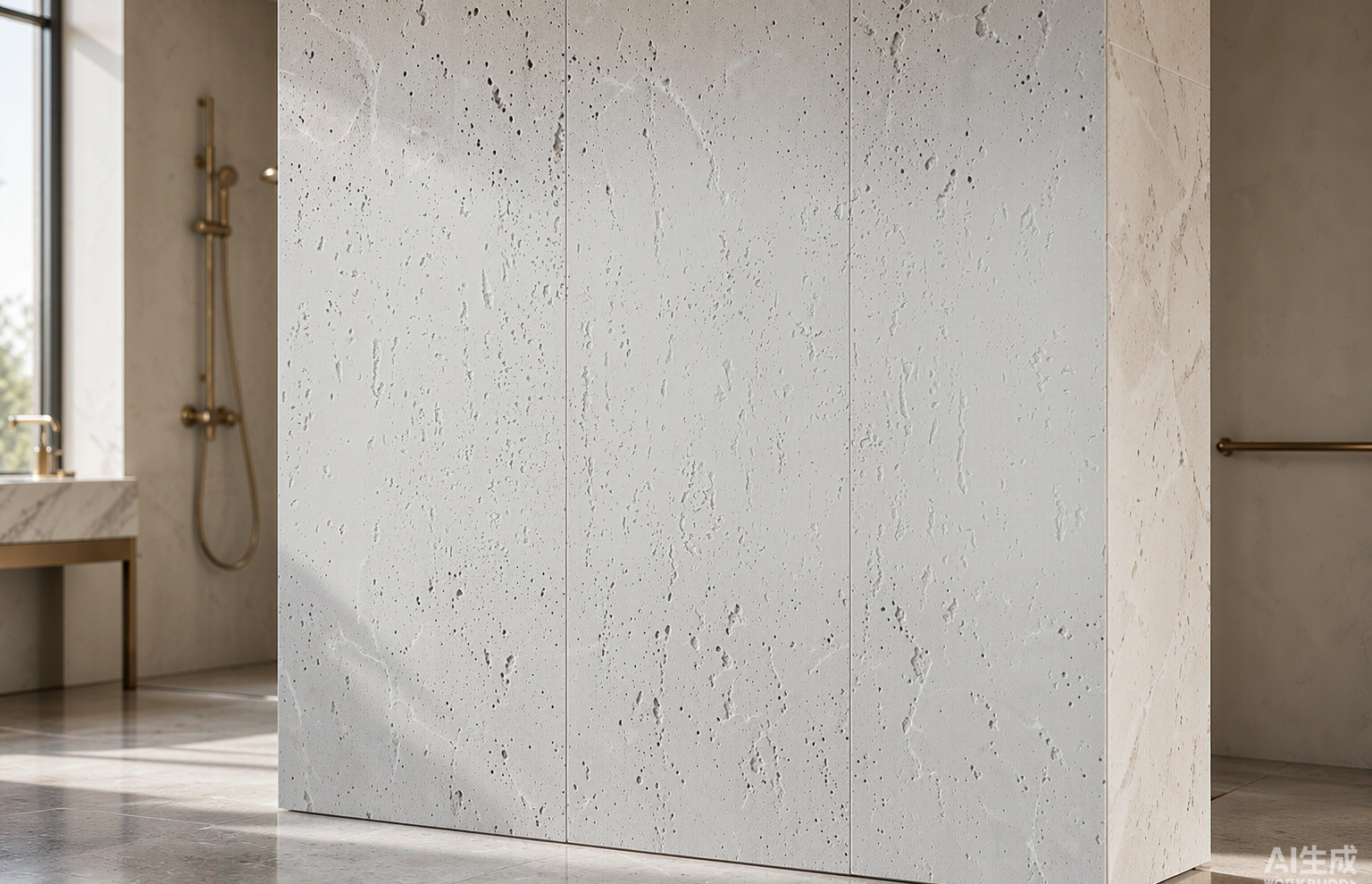
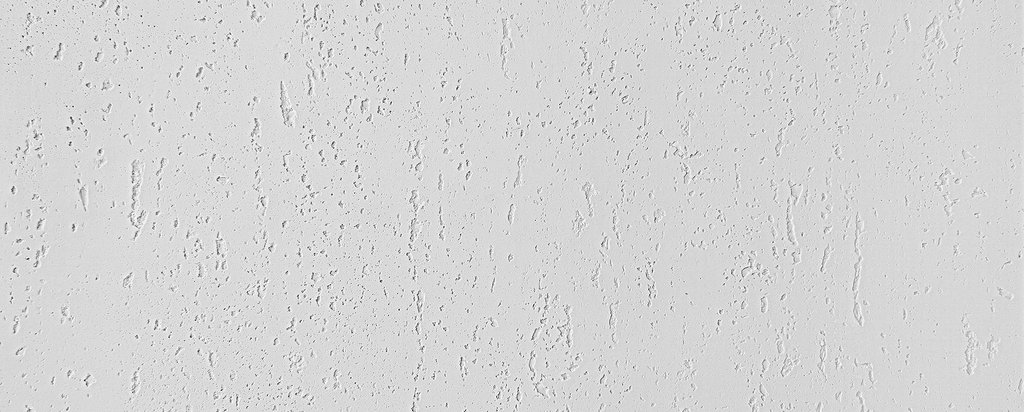
Bathroom and spa walls: waterproof the substrate first, then bond the sheet, and keep joints sealed at wet edges and at every change of plane. The travertine and mosaic-travertine looks are specified this way as a mineral face instead of a heavy slab, which keeps the build-up light on stud and block walls. The interior-walls route is described on the interior walls application page.
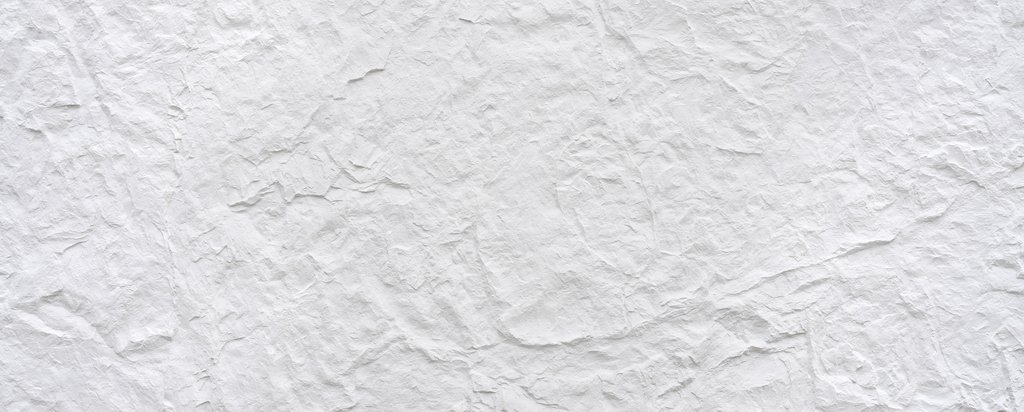
Poolside and landscape walls: splash and chlorinated mist sit on the face, so a low-absorption surface matters. Absorption below 0.1 kg/m²·h⁰·⁵ keeps staining low — the boulder-slab look holds a split-rock face at 3–8 kg/m² — but falls, drainage and parapet details still belong to the slab or wall detail, not to the skin. Those routes are grouped on the landscape application page.
Adhesive and joints: confirm the wet-zone adhesive type and joint detail on the current series data sheet before scheduling. In practice the installation route is the same nine-step sequence used in dry areas, with the wet-zone line called out at the substrate and joint steps.
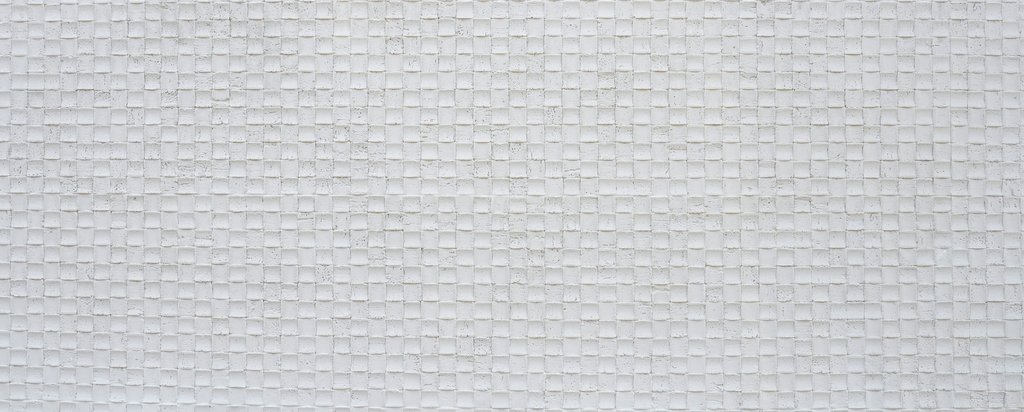
The photograph below shows why the material reads as stone even in a wet room: the sheet carries the texture of travertine across a shower wall, while the waterproofing sits invisibly behind it in the substrate.
A wet-zone installation checklist
1. Waterproof the substrate and allow it to cure before any sheet is fixed. Confirm the membrane and the adhesive are compatible on the current series data sheet.
2. Set out from a fixed datum so joints stay aligned across the wet wall and continue cleanly onto adjacent dry walls.
3. Bond the 2–4 mm sheet with the specified wet-zone adhesive, working from the base upward and keeping the bed even.
4. Seal joints at wet edges, corners and changes of plane, and detail movement joints where the background changes.
5. Confirm falls to drains and the final seal at the floor junction, then record the finish and reference for handover.
Where it fits
Interior wet zones are covered on the interior wall application page; poolside and planter walls on the landscape page; and the forty looks catalogue shows the travertine, boulder-slab and mosaic-travertine faces referenced above. If the underlying question is whether the sheet can replace waterproofing, the answer is no — the substrate and adhesive note covers what stays with the wall build-up, and the installation guide covers the sequence.
Bottom line
Flexible stone absorbs below 0.1 kg/m²·h⁰·⁵, carries 3–8 kg/m² instead of 10–40, and keeps a stone or timber look in wet zones where slab weight and wide tile joints are hard to manage. The waterproofing stays with the wall. Confirm the current series data sheet before specification.
See the look board, or request a sample and the current data sheet.
Specifying a wall? Ask for the current data sheet and a sample of the look.